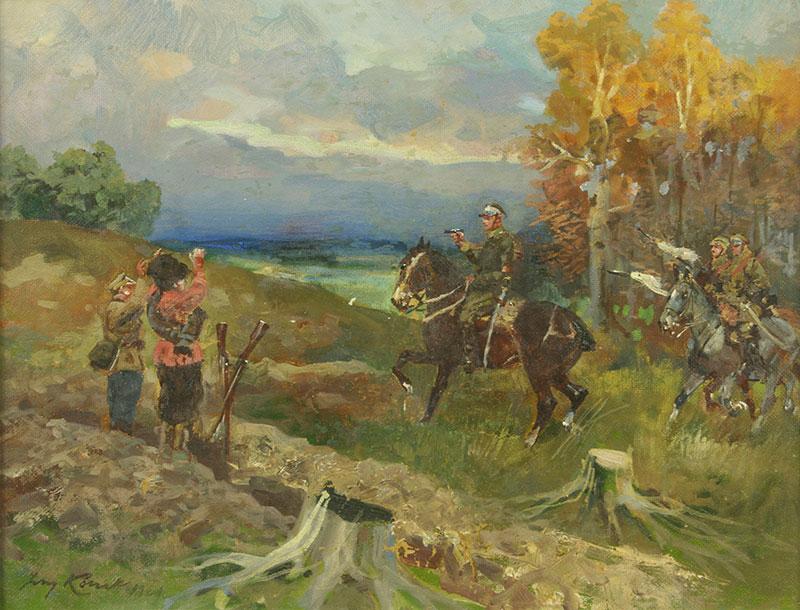
olej, tektura, 38 x 49 cm, sygn. l.d.: Jerzy Kossak 1929, po konserwacji
Jerzy Kossak was a Polish painter and one of the most recognisable representatives of the celebrated Kossak family of artists. Born in Kraków, he was the son of Wojciech Kossak and the grandson of Juliusz Kossak, growing up in the unique atmosphere of Kossakówka — the family home and studio that became one of the symbolic places of Polish artistic culture.
From an early age, Jerzy Kossak was surrounded by painting, literature, horses, military history and patriotic tradition. He learned primarily within the family workshop, observing the artistic practice of his grandfather and father rather than following a conventional academic path. This background shaped both his technique and his choice of subjects.
The paintings of Jerzy Kossak are associated above all with battle scenes, cavalry, uhlans, horses, hunting scenes, Napoleonic themes and genre scenes from Polish life. His art continued the visual language developed by earlier generations of the Kossak family, while remaining accessible, narrative and strongly rooted in Polish historical imagination. Horses occupy a particularly important place in his work — often shown in motion, during a charge, pursuit, military halt or in a winter landscape.
Kossak worked mainly in oil, painting on canvas, board, cardboard or plywood. In the interwar period, he created numerous works for private collectors, military circles and landed families. His compositions often combine historical subject matter with dynamic movement, vivid colour and a clear, readable narrative.
Today, Jerzy Kossak’s paintings remain sought after on the Polish art market, especially works depicting cavalry, horses, battle scenes and the retreat of Napoleon from Moscow. When assessing a painting by Jerzy Kossak, collectors pay attention not only to the subject, but also to quality, date, technique, condition, provenance and comparison with other known works by the artist.